Top 10 Sega Mega Drive Games
· Updated · Megadrive
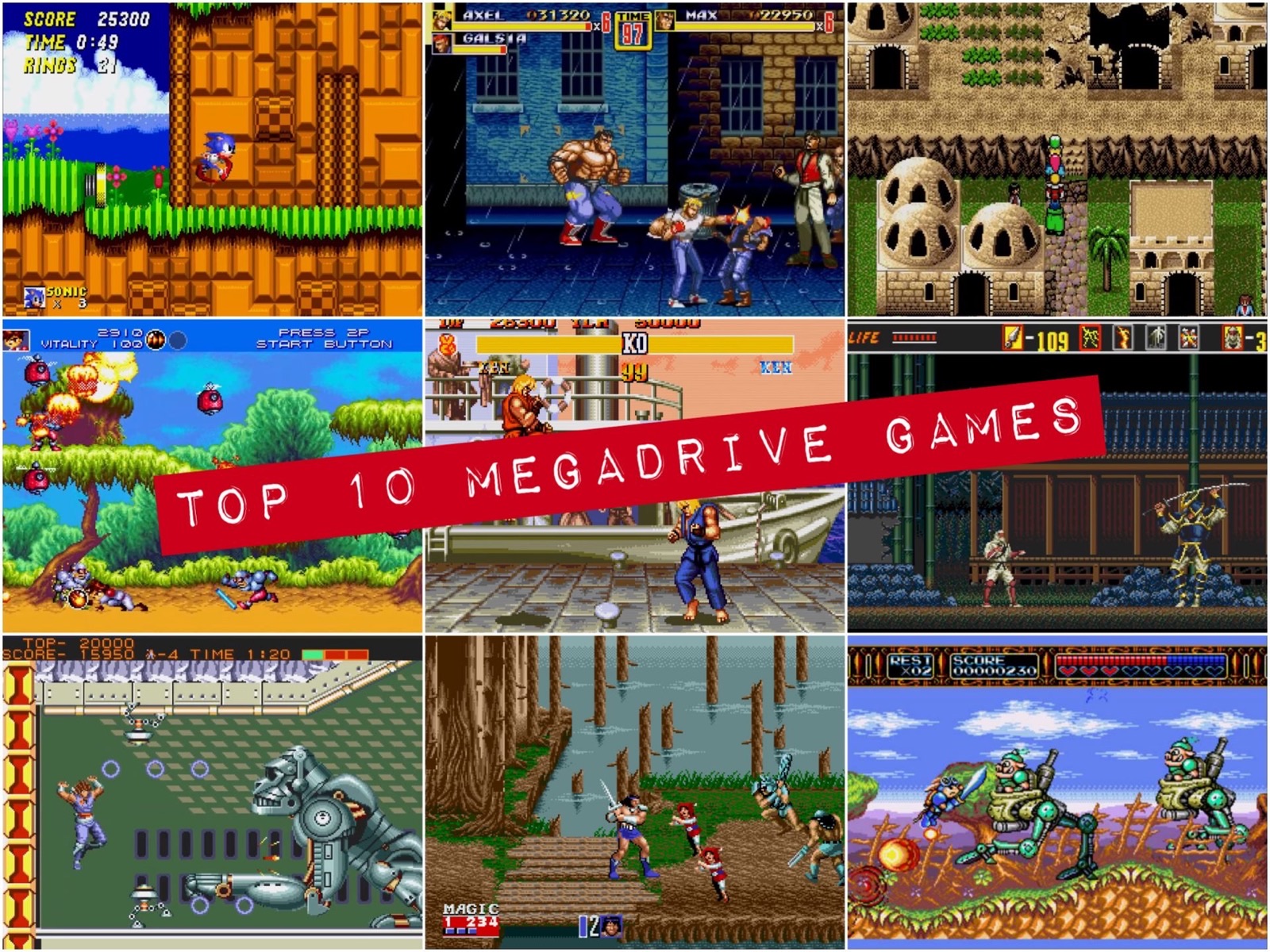
Top 10 Mega Drive Games: The Best Sega Megadrive Games Ever!
Games every Mega Drive owner should play
Every Mega Drive owner will have had their own personal favourites on Sega’s legendary 16-bit console, and I have drawn up a list of what I believe to be the best. My Mega Drive Top 10 is based on games that, more than 30 years later, still feel fast, loud, bold and brilliant: everything Sega stood for in its golden age.
Quick answer: the best Mega Drive games are Sonic the Hedgehog 2, Streets of Rage 2, Phantasy Star IV, Gunstar Heroes, Street Fighter II, Rocket Knight Adventures, The Revenge of Shinobi, Strider, Golden Axe II and Aero Blasters. Each one shows what 16-bit gaming could really do.
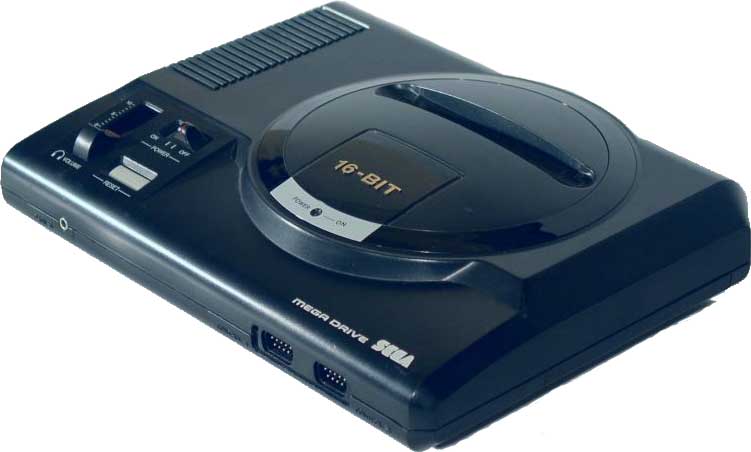 The Sega Mega Drive, known as the Genesis in North America
Back in the early 90s, the console wars were fierce. Nintendo had the SNES, with its Mode 7 effects and Mario, but Sega had attitude. While Nintendo was family-friendly, Sega was the cool older brother: faster games, arcade conversions, a blue hedgehog with a bad attitude and the slogan “To be this good takes AGES”. In the UK in particular, the Mega Drive became the console to own.
You could claim that I have made some notable exclusions, such as Shinobi III, Castlevania: Bloodlines and Thunder Force IV. All I can say is that this is my list, and I have my reasons for every game included here.
Why the Mega Drive was built for arcade games
The Mega Drive launched in Japan in 1988 and reached the UK in 1990, with a simple mission: bring real arcade-quality games into your living room. Under the bonnet was a Motorola 68000 processor, the same chip that powered many of Sega’s arcade boards, plus a Z80 and a Yamaha FM sound chip that gave the console its unmistakable gritty, punchy sound.
That arcade heritage shaped its library. Sega converted its coin-op hits, Capcom and Konami brought their best action games, and a new generation of developers, most famously Treasure, used the hardware to make games that were faster and wilder than anything else in the shops. The Mega Drive was never the most powerful machine on paper, but its games had energy that has aged remarkably well.
Here’s the list at a glance:
- Sonic the Hedgehog 2 – the ultimate high-speed platformer
- Streets of Rage 2 – the beat-’em-up that got everything right
- Phantasy Star IV – an epic space RPG that wrapped up the series perfectly
- Gunstar Heroes – wild run-and-gun action that never stops surprising you
- Street Fighter II: Special Champion Edition – the fighting game that changed everything
- Rocket Knight Adventures – jetpack platforming done brilliantly
- The Revenge of Shinobi – ninja action that showed off the new console
- Strider – the arcade conversion that made jaws drop
- Golden Axe II – a fantasy brawler that improved on an arcade classic
- Aero Blasters – a shoot-’em-up that found the perfect sweet spot
So after much deliberation, here are my Top 10 Mega Drive games…
10 – Aero Blasters
Kaneko – 1991
Known as Air Buster in the arcades, Aero Blasters is a horizontally scrolling shoot-’em-up that hits that perfect spot between bullet-hell madness and boring repetition, making a game that feels tough but fair. The Mega Drive had more great shooters than almost any other console, so picking just one was hard, but this is the one I keep coming back to.
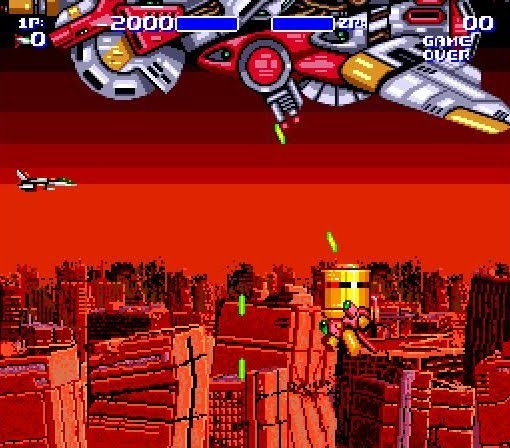 Aero Blasters on the Mega Drive
Instead of just mashing buttons and hoping for the best, the weapon system rewards you for experimenting with power-ups, and its stages vary the pace brilliantly, with some stages turning up the scrolling speed so that the scenery itself becomes the enemy. The two-player mode turns what could be total chaos into real teamwork, where working together matters just as much as quick reflexes.
It’s not the most famous shooter on the system (Thunder Force IV and M.U.S.H.A. have louder fan clubs), but it’s the one that best sums up why the Mega Drive was a shmup fan’s dream: smooth, fast, colourful and endlessly replayable.
9 – Golden Axe II
Sega – 1991
Golden Axe II shows how to do a sequel right, taking everything that worked about the arcade original while fixing what didn’t. Unlike the first game, it was made for home consoles rather than converted from the arcade, and it shows in the tighter pacing and better balance.
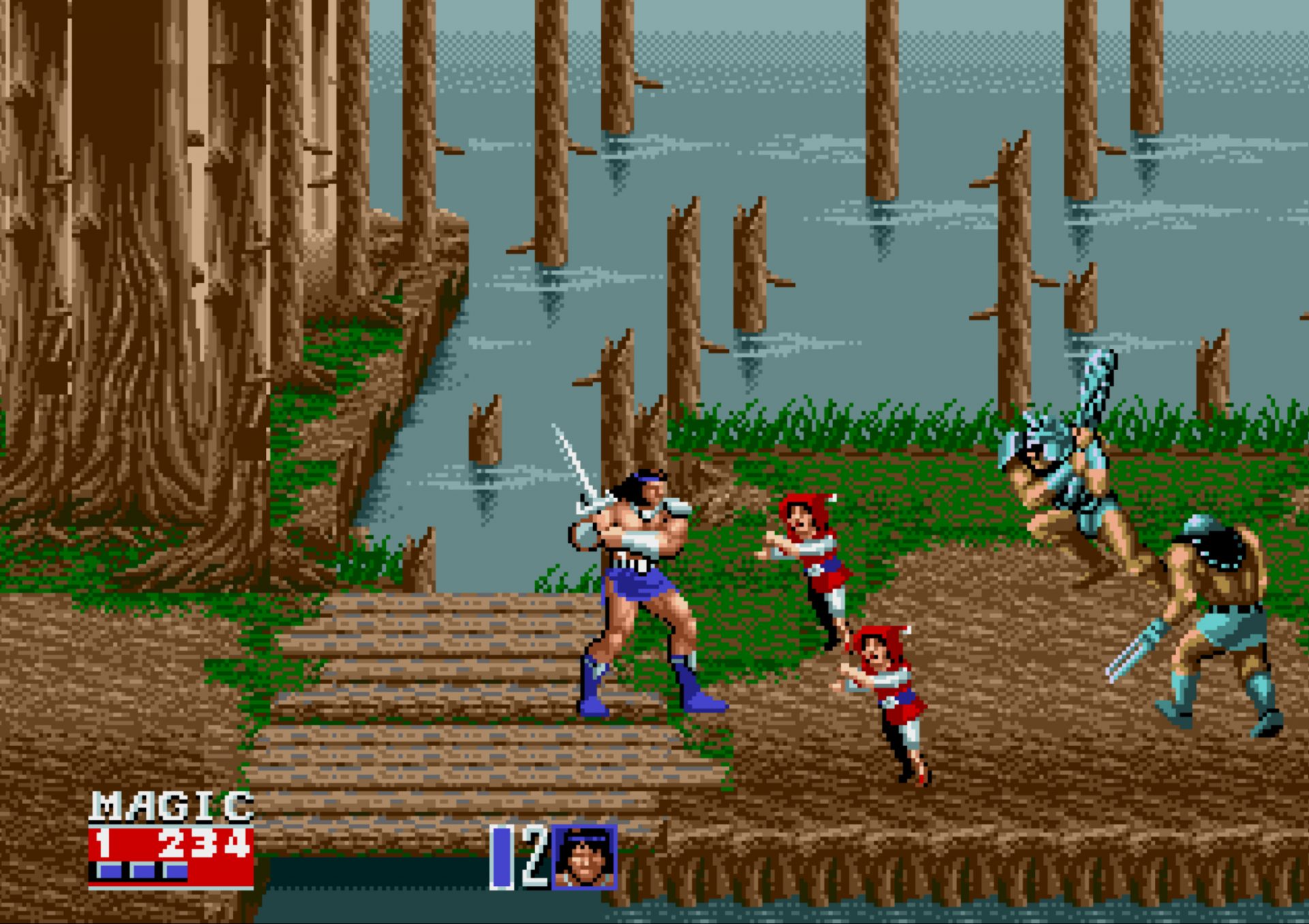 Golden Axe II on the Mega Drive
The team knew that just adding more levels wasn’t enough, so they focused on making each character feel distinct. Ax Battler’s sword skills, Tyris Flare’s devastating fire magic and Gilius Thunderhead’s dwarf-sized axe all play very differently, so you’ll want to go through the game more than once. The magic system was improved too: instead of unleashing everything at once, you could choose how many magic pots to spend, turning screen-clearing spells into proper tactical tools.
Riding the beasts, robbing the little thieves of their potions and fighting alongside a mate on the sofa – it’s Golden Axe at its most polished, and one of the best two-player games on the console.
8 – Strider
Sega (licensed from Capcom) – 1990
Strider Hiryu moves through his world with a fluid grace that still looks amazing today, cartwheeling, sliding and clambering along walls and ceilings in a way that made movement itself feel like an art form. When it arrived on the Mega Drive, it was one of the first games on an 8-megabit cartridge, and it looked astonishingly close to the arcade original.
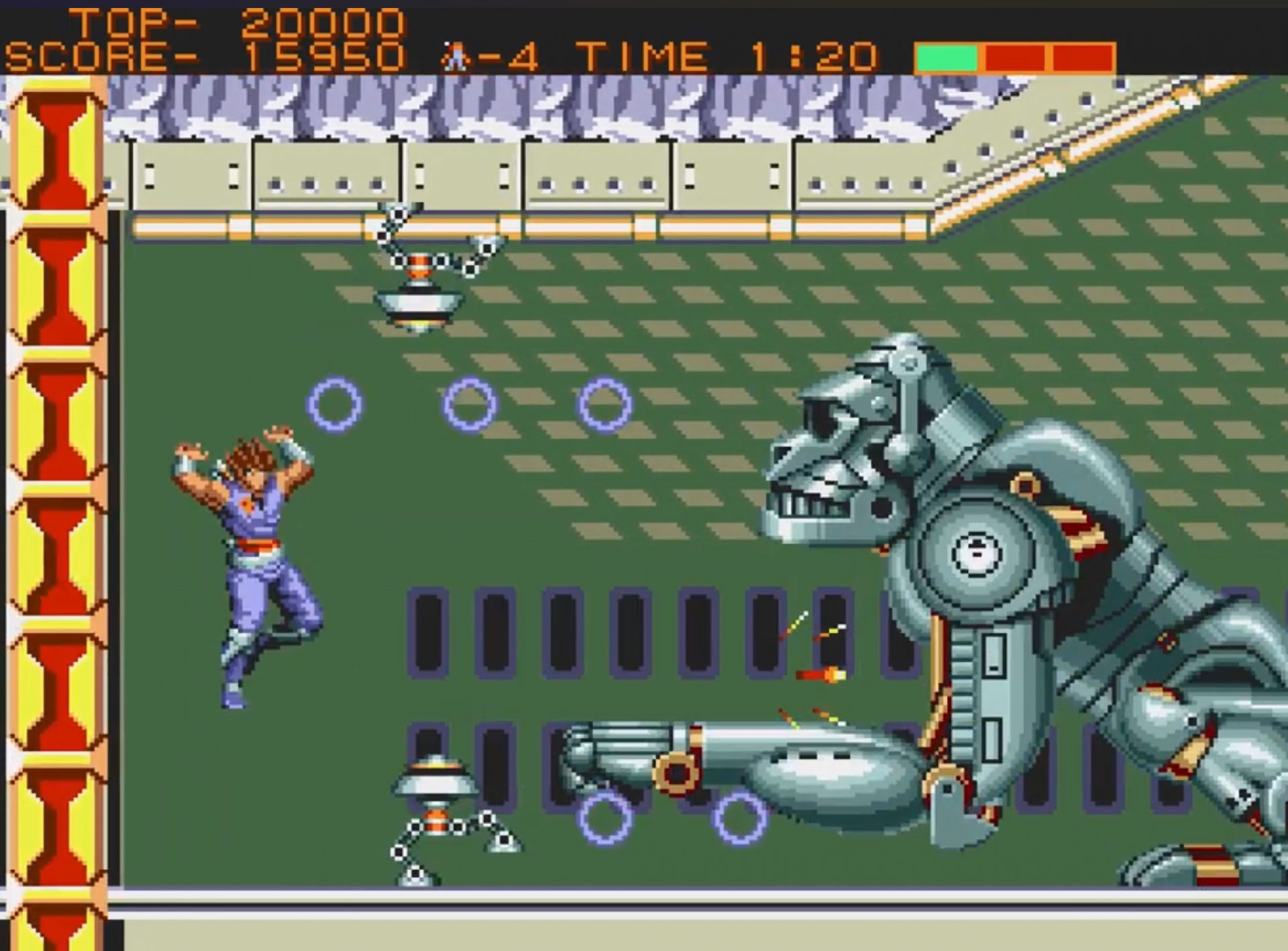 Strider takes on the giant robot gorilla
Capcom’s arcade design made every surface something to use rather than get stuck on, and Sega’s conversion kept almost all of it. The plasma sword, the Cypher, has perfect weight and reach, making fights feel like a deadly dance rather than just hacking away. The bosses are unforgettable, from the snake-like Ouroboros, assembled from the politburo of a Soviet parliament, to the giant robot gorilla.
For many of us, this was the game that proved the Mega Drive really could put the arcade in your living room. It’s short, but every second of it is spectacular.
Check out my full review of the Strider arcade game.
7 – The Revenge of Shinobi
Sega – 1989
As one of the Mega Drive’s big early showcase games, The Revenge of Shinobi had huge pressure to prove what the new system could do, and it set the bar for cinematic action games. Playing as ninja master Joe Musashi, you fight your way through eight districts to rescue your kidnapped bride from the Neo Zeed crime syndicate.
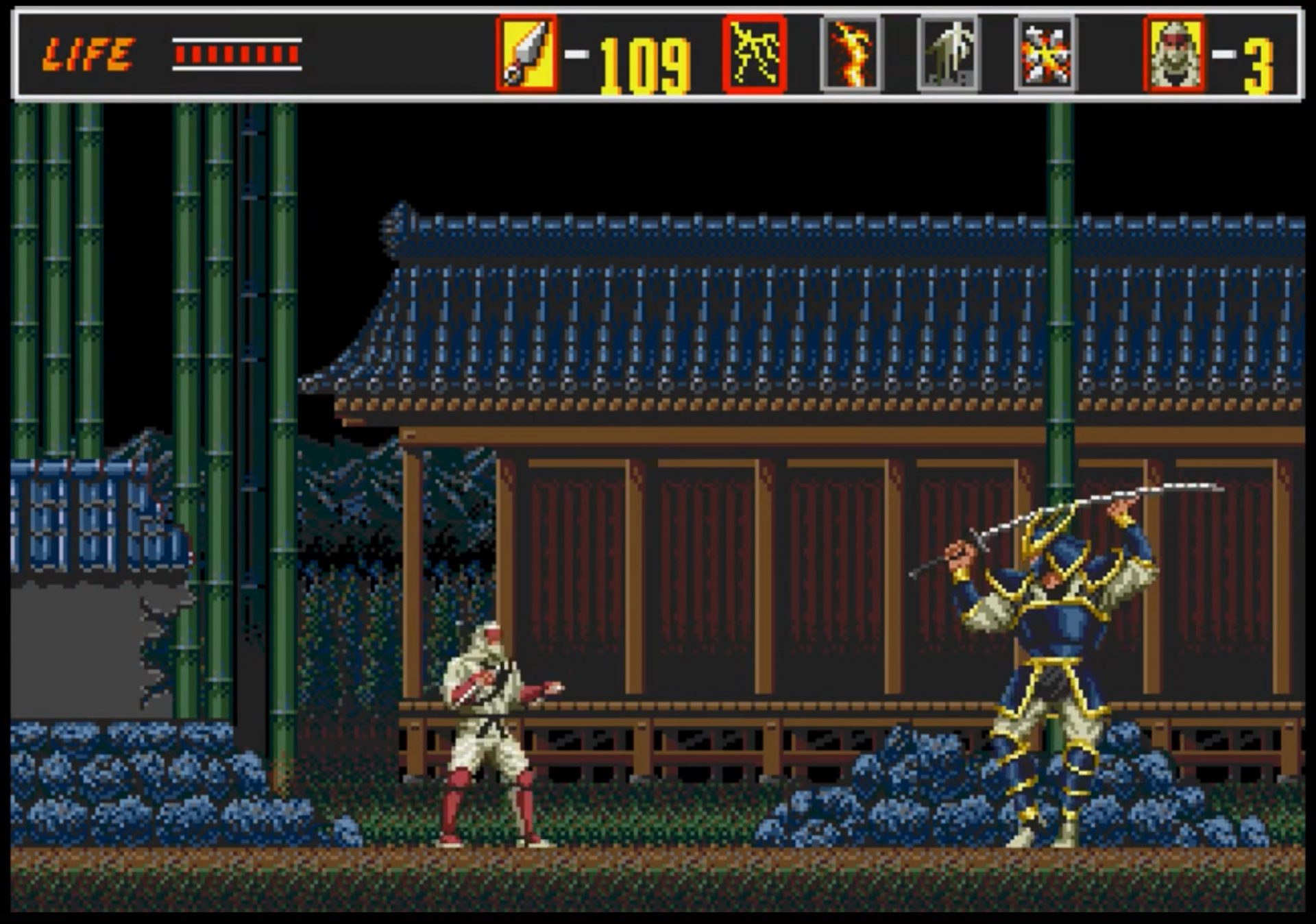 The Revenge of Shinobi end boss battle
Joe hits a great balance between feeling powerful and staying vulnerable. Your supply of shurikens is limited, which stops you just spamming projectiles at everything, and his four ninjutsu magic spells can only be used once per life. The most powerful, Mijin, makes Joe explode and costs you a life, creating a real tactical choice. The game was also famous for its unofficial guest stars: early versions featured bosses that looked suspiciously like Spider-Man, Batman and Godzilla, later redrawn to avoid legal trouble.
Yuzo Koshiro’s incredible soundtrack deserves special mention for pushing the Mega Drive’s sound as far as it could go, setting the tone for a composer whose work appears again further up this list.
6 – Rocket Knight Adventures
Konami – 1993
Sometimes the best ideas sound completely nuts on paper, and an armoured opossum knight with a jetpack definitely falls into that category. Yet Rocket Knight Adventures turned this odd concept into one of the most inventive platformers on the system.
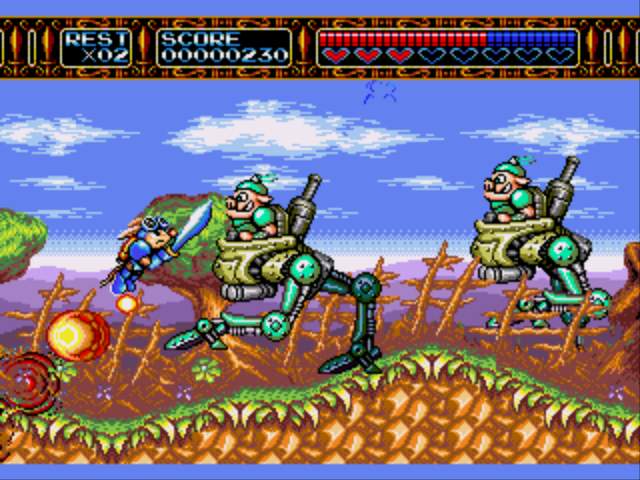 Sparkster in Rocket Knight Adventures
Sparkster’s jetpack changes how platforming works, giving you far more than an extra jump or hover. You can charge up rocket boosts that send you ricocheting off walls and smash through enemies, or make precise mid-air moves to slip through tight spaces, and the sword attacks feel incredibly satisfying. Konami’s programmers squeezed in visual effects that seemed almost impossible on Mega Drive hardware, including rotation and scaling tricks usually associated with the SNES.
Every level brings new ideas, from riding a mine cart to piloting a giant robot in a boxing match, and the pace never drops. Konami made its name on Nintendo consoles, but this Mega Drive exclusive is among the best things it made in the 16-bit era.
5 – Street Fighter II: Special Champion Edition
Capcom – 1993
Street Fighter II wasn’t just a great fighting game, it was a cultural event that turned gaming into a truly social experience. Mega Drive owners had to wait while SNES owners played it first, but when Special Champion Edition finally arrived, it was worth it: all 12 fighters, including the four boss characters, playable from the start.
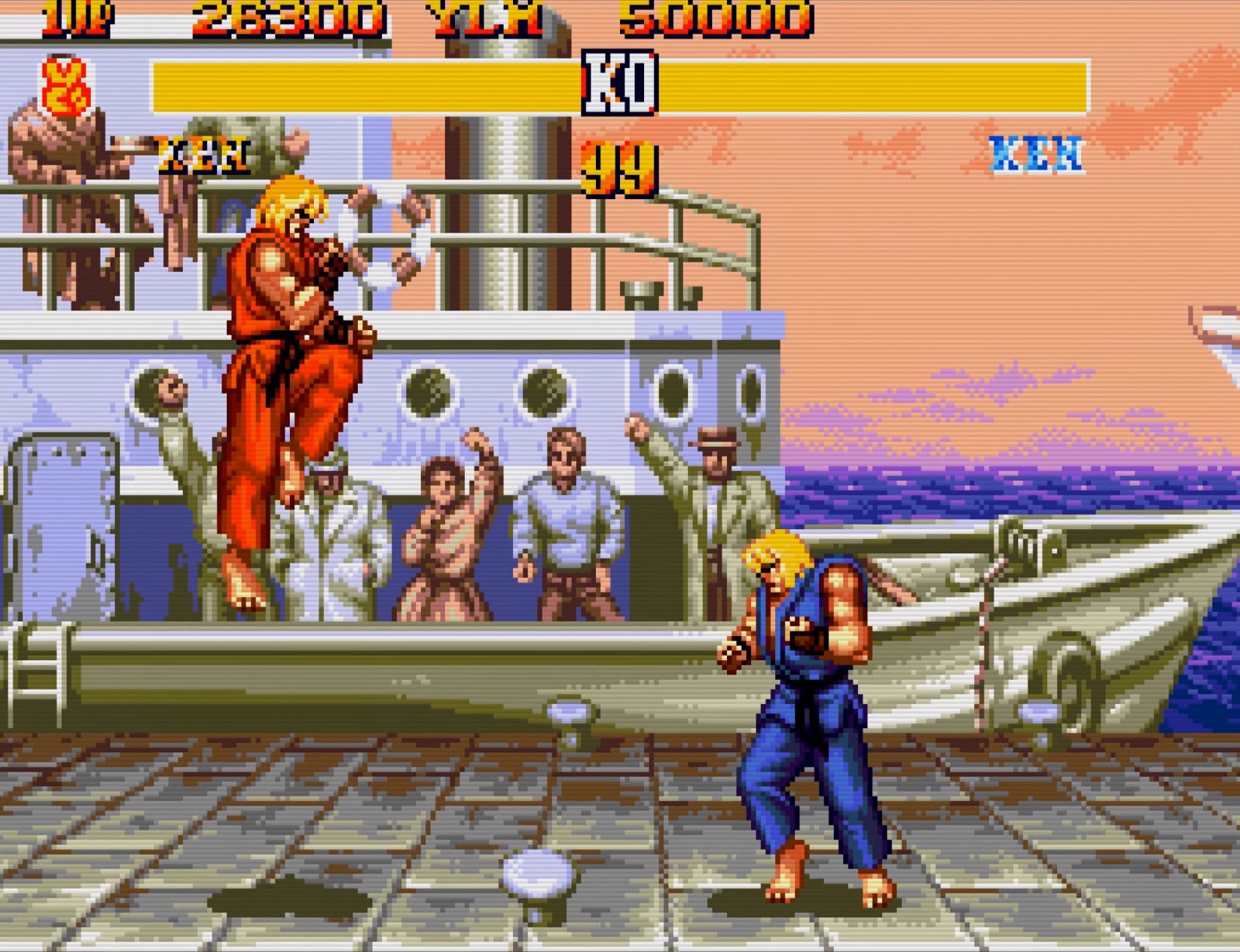 Ken vs Ken in Street Fighter II
Each world warrior offers a different way to fight that reflects their personality. Ryu’s balanced moves teach you the basics, Zangief’s grappling game rewards patience and positioning, and Chun-Li’s speed and kicks create a totally different rhythm. The Mega Drive version kept the arcade’s tight timing and responsive controls that made competitive play possible.
The one catch was the controller. Street Fighter II uses six attack buttons, and the original Mega Drive pad only had three, so Sega released a six-button controller alongside the game. Once you had one, there was no going back, and this version still holds up brilliantly today.
4 – Gunstar Heroes
Treasure – 1993
Treasure’s debut announced the arrival of a developer unlike any other, one that cared about pure creative fun over market research or playing it safe. Formed by ex-Konami staff, Treasure would go on to make some of the most admired action games ever, but Gunstar Heroes remains a high point.
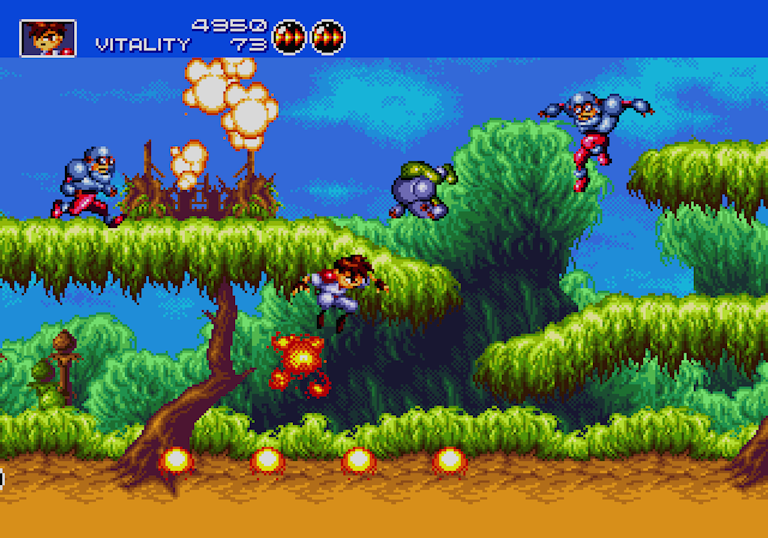
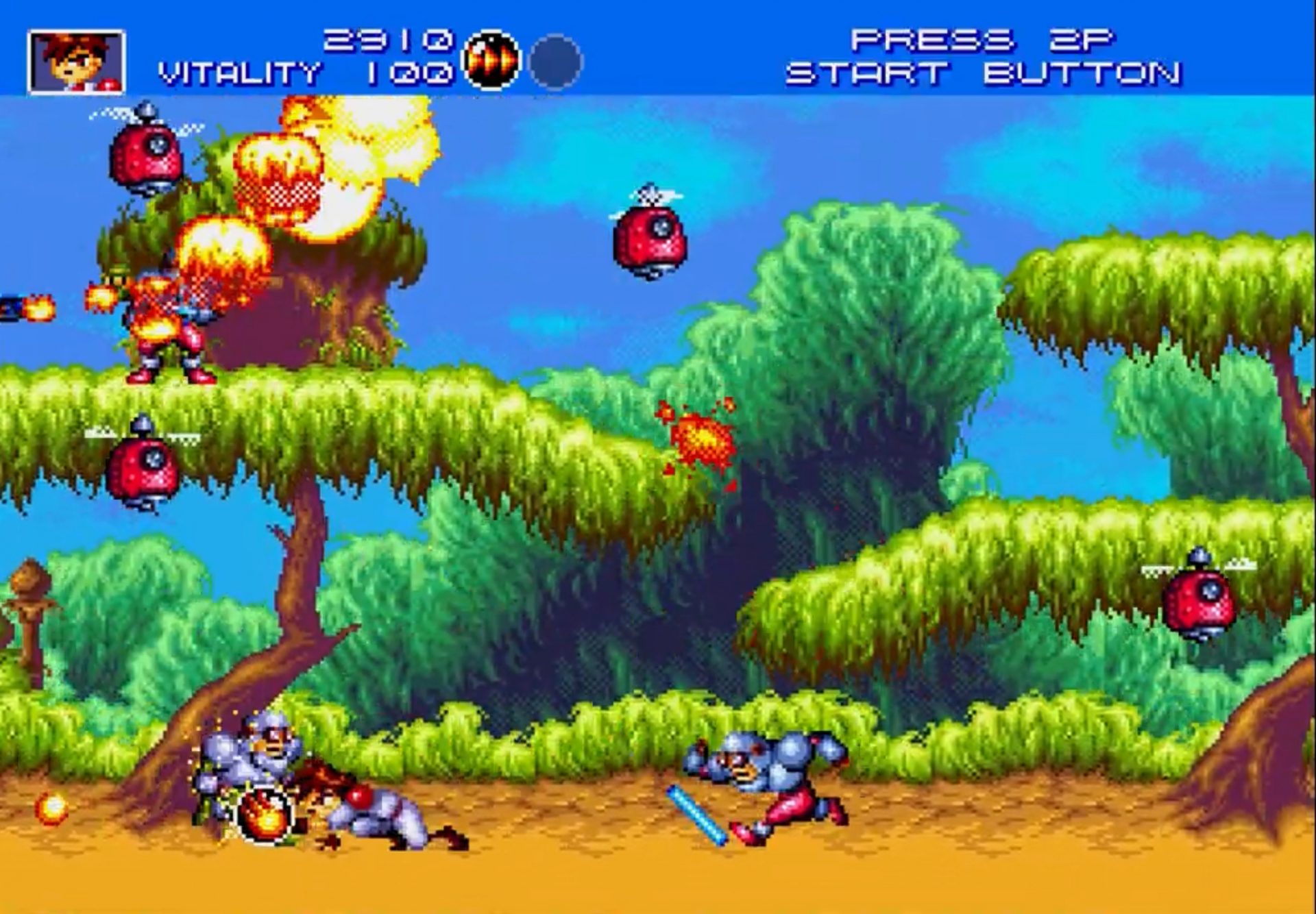 Frantic action in Gunstar Heroes
The weapon-mixing system alone could have carried a whole game. You pick from four basic shot types and combine any two, creating over a dozen weapons with their own uses, from homing lasers to a flame sword. Treasure kept adding ideas: a stage built around a giant board game, massive mechanical bosses that fill the screen, and the legendary Seven Force, a boss that transforms into seven different forms. Co-op play makes the chaos even better, letting two players fight side by side and even throw each other around.
It all runs smoothly despite the amount on screen, which seemed almost impossible on the hardware. If you only play one game on this list that you’ve never tried before, make it this one.
Check out my full review of Gunstar Heroes.
3 – Phantasy Star IV: The End of the Millennium
Sega – 1993 (1995 in the West)
While the gaming world was focused on other RPG series, Sega quietly crafted something truly special with Phantasy Star IV, bringing its space-fantasy saga to an epic conclusion and proving it could match any sword-and-sorcery epic on the SNES.
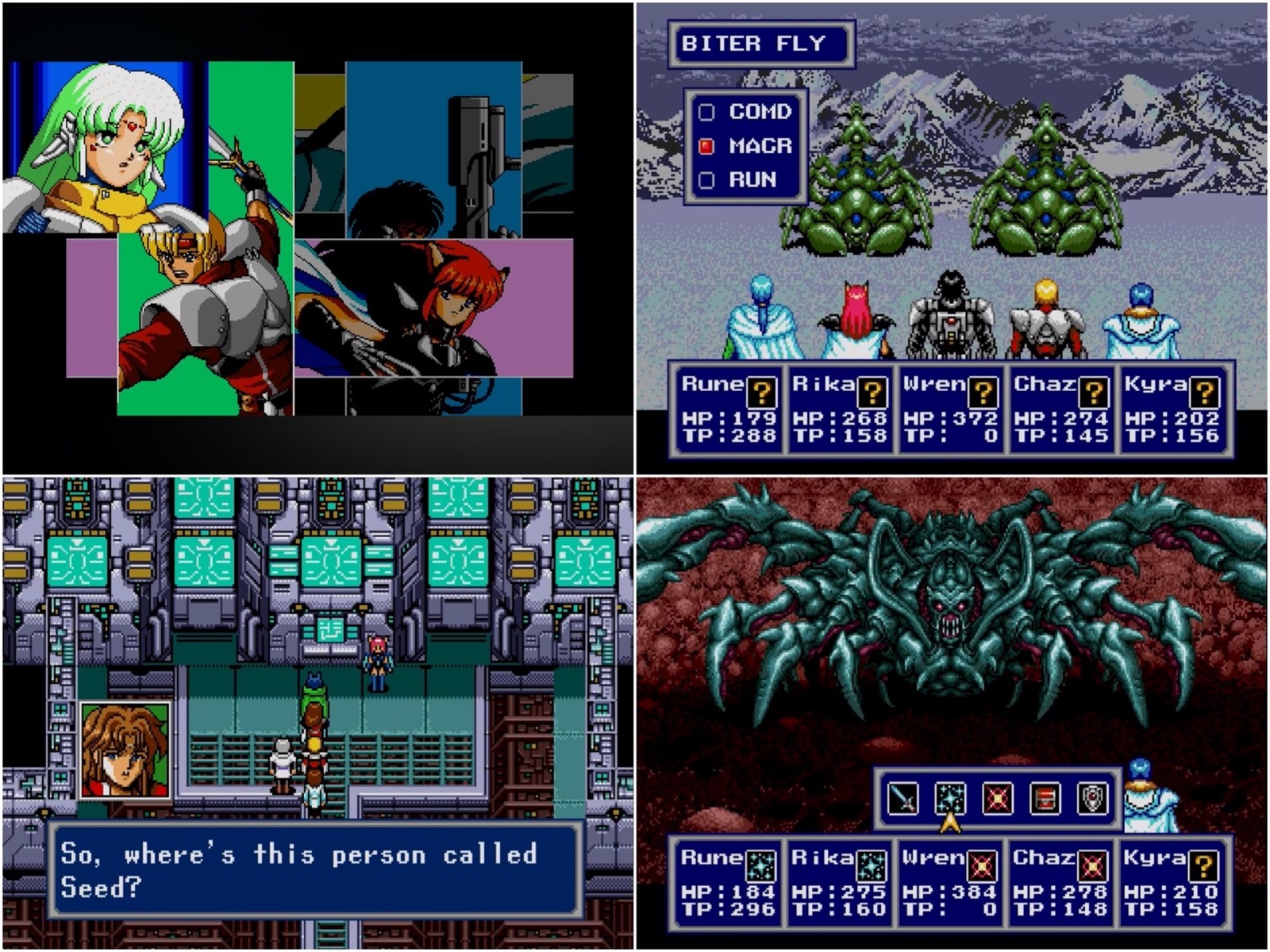 The cast of Phantasy Star IV
The combination attack system encourages you to experiment with your party, as certain techniques used together in the right order unleash powerful combo attacks. The manga-style comic panels used for cutscenes brought story moments to life without drowning you in endless walls of text, and the pacing is much brisker than earlier entries in the series. The characters show real personality, and each planet in the Algo system feels distinct.
It arrived late in the console’s life (it came out in Europe in 1995, when most people were looking at the PlayStation), so plenty of Mega Drive owners missed it. If you enjoy classic RPGs like Chrono Trigger, it is essential.
2 – Streets of Rage 2
Sega – 1992
Streets of Rage 2 represents the peak of side-scrolling beat-’em-up design, reaching a level of polish and smart gameplay that the genre has rarely topped. Mr. X’s syndicate has kidnapped Adam, and his friends take to the streets to get him back.
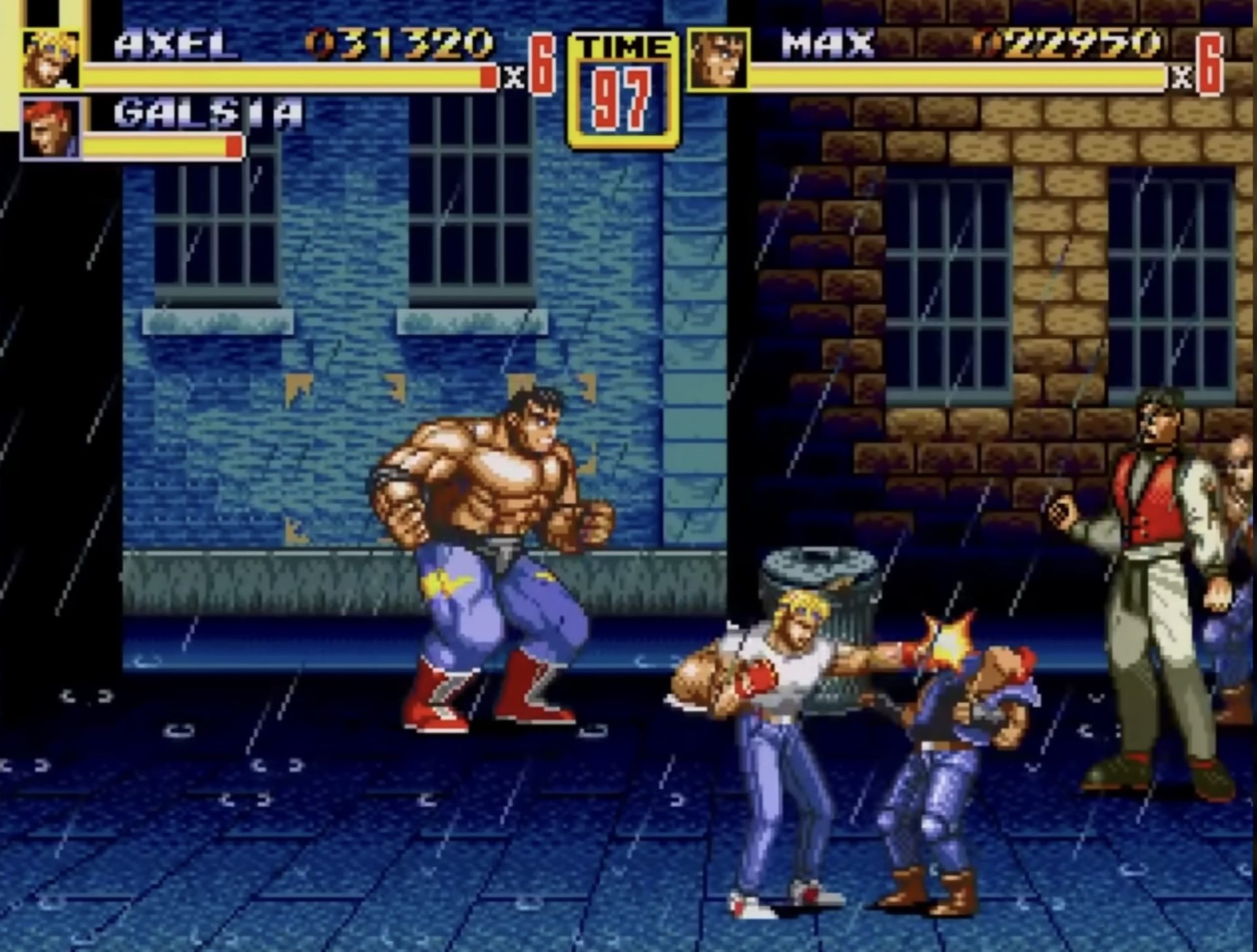 Fighting through the city in Streets of Rage 2
Sega’s team made each of the four playable characters feel very different. Axel’s balanced approach teaches you the combat basics, Blaze’s range and agility reward smart positioning, Max is a slow but devastating wrestler, and Adam’s younger brother Skate uses speed and hit-and-run tactics. The sprites are big, the hits are meaty, and every special move has a satisfying crunch.
Yuzo Koshiro’s soundtrack, created with Motohiro Kawashima, is one of gaming’s greatest musical achievements. Tracks like “Go Straight” and “Dreamer” brought early-90s club music to the Mega Drive’s FM chip, and they still get remixed and played live today.
1 – Sonic the Hedgehog 2
Sega – 1992
Sonic the Hedgehog 2 captures everything wonderful about the Mega Drive’s spirit in one brilliant blue package. Launched worldwide in November 1992 with a huge “Sonic 2sday” marketing campaign, it was Sega’s mascot at his finest and the moment the Mega Drive truly took on Nintendo.
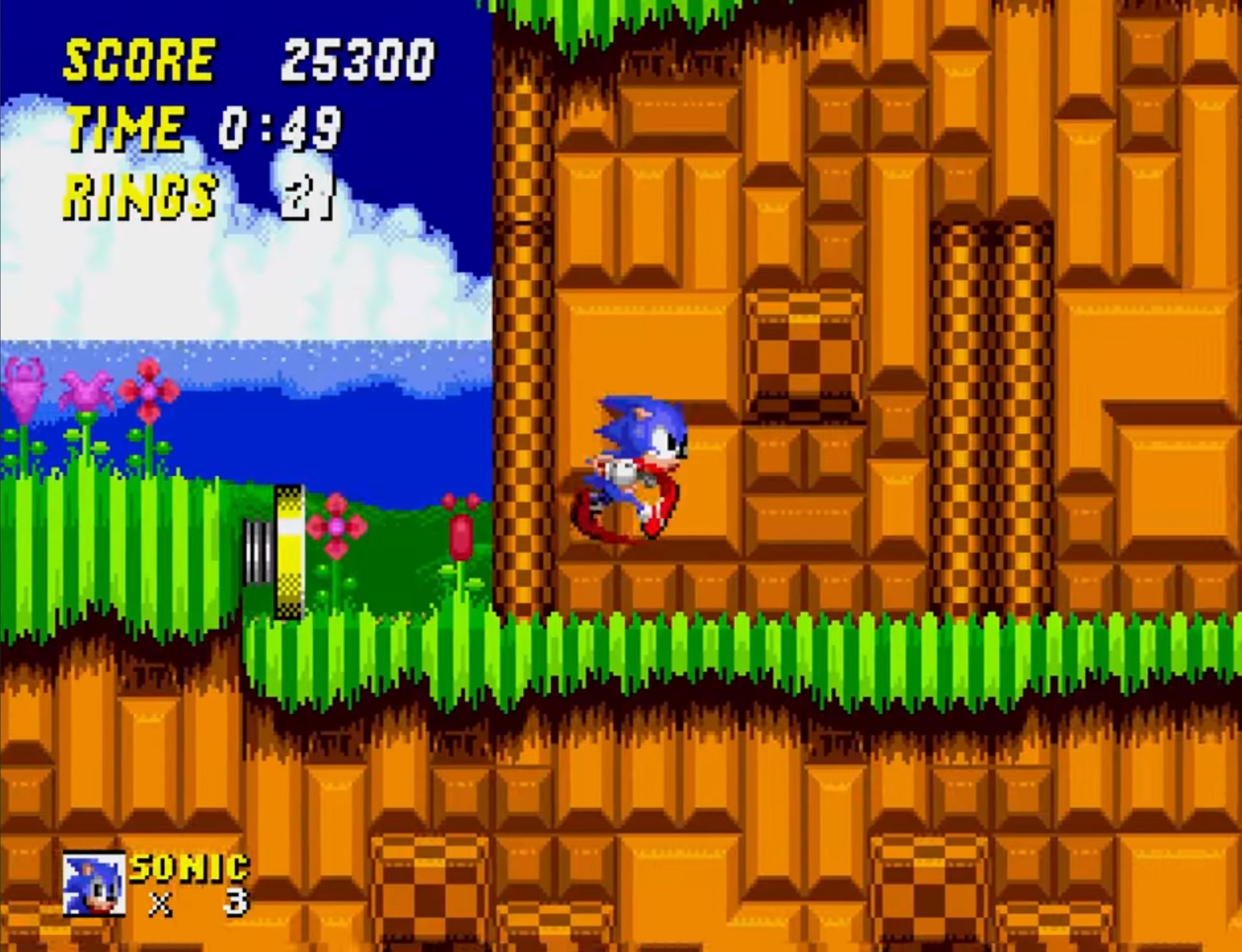 Sonic the Hedgehog 2
The new spin dash turned Sonic from simply being a fast character into a player-controlled force of nature, giving you instant access to his signature speed while keeping the precise control needed for trickier sections. The level design is wonderful, from Chemical Plant Zone’s rising pink waters to Casino Night Zone’s pinball tables and the tough industrial courses of Metropolis Zone. Collect all seven Chaos Emeralds in the half-pipe special stages and you unlock Super Sonic, one of gaming’s great rewards.
Adding Tails created one of gaming’s most elegant co-op setups, letting a younger sibling or friend tag along without punishing the lead player, and the split-screen two-player race mode was a playground favourite. It’s fast, bright, catchy and still a joy to play, and for me it’s the best Mega Drive game ever made.
The best Mega Drive games that didn’t make the top 10
There were so many exceptional games for the Mega Drive that they couldn’t all make it into my top 10. Publishers like Sega, Konami, Capcom and Treasure produced so many fantastic games that they probably deserve a Top 10 in their own right.
Here are some that could easily have made it into the list:
- Shinobi III: Return of the Ninja Master – an even slicker sequel to The Revenge of Shinobi, with horse-riding and surfing stages
- Castlevania: Bloodlines – Konami’s only Mega Drive Castlevania, and a gory, atmospheric gem
- Thunder Force IV – Technosoft’s blistering shooter, often called the best on the system
- Landstalker – a charming isometric action-RPG that took the Mega Drive in a different direction
- Sonic 3 & Knuckles – the two halves combine into one of the biggest and best platformers of the era
- ToeJam & Earl – two alien rappers exploring randomly generated islands; weird, funny and best with a friend
I hope this list inspires you to dig out your Mega Drive, or fire up a collection, and try these games for yourself. They may be over 30 years old, but they remain fast, fun and in many cases better than their modern equivalents.
The Mega Drive brought arcade attitude into British living rooms and gave Nintendo the fight of its life. If you’re interested in the other side of that rivalry, see my Top 10 NES and Famicom games, and for the home computers many Mega Drive owners graduated from, my Top 10 Spectrum and Top 10 Amiga games.
Frequently Asked Questions
What is the best Sega Mega Drive game of all time?
Every fan has a favourite, but Sonic the Hedgehog 2 and Streets of Rage 2 top most lists, with Gunstar Heroes, Phantasy Star IV and Shinobi III close behind. My number one is Sonic 2, for its speed, level design and two-player mode.
What was the best-selling Mega Drive game?
The original Sonic the Hedgehog is generally cited as the best-selling Mega Drive game, helped enormously by being bundled with the console. Sonic 2 was also a massive seller, and both helped Sega compete with Nintendo during the early 90s.
What is the difference between the Mega Drive and the Genesis?
They are the same console. It was sold as the Mega Drive in Japan, Europe and most of the world, and as the Genesis in North America because of a trademark issue. Games are largely the same, though region differences in the cartridge shape and lockouts mean not every game works on every machine without an adaptor.
Were Mega Drive games slower in the UK?
Often, yes. UK and European TVs used the 50Hz PAL standard, and many games written for 60Hz Japanese and American machines simply ran around 17% slower, with black borders at the top and bottom of the screen. Some later releases were properly optimised for PAL, but many UK owners played a slightly slower Sonic than American kids did.
How many games were released for the Mega Drive?
Roughly 900 games were officially released across all regions, plus many more unlicensed titles, and the Mega Drive still has an active homebrew scene producing new cartridges today.
Was the Mega Drive better than the SNES?
That was the great playground argument of the 90s! The SNES had more colours, better sound sampling and hardware effects such as Mode 7, while the Mega Drive had a faster processor, a bigger head start and a library packed with arcade conversions and fast action games. Both had brilliant libraries; which was better comes down to the games you loved.
What were the Mega-CD and 32X?
Both were add-ons that plugged into the Mega Drive. The Mega-CD (Sega CD in North America) added a CD drive for bigger games and full-motion video, and the 32X added 32-bit processing power. Neither sold particularly well, and the 32X was quickly overshadowed by the Sega Saturn.
What was “blast processing”?
It was a marketing term used in Sega’s American adverts to suggest the Mega Drive was faster than the SNES. It loosely referred to the console’s fast processor and graphics capabilities, but it was mostly advertising swagger, in keeping with Sega’s “Sega does what Nintendon’t” attitude.
Can you still play Mega Drive games today?
Yes. The Sega Mega Drive Mini (2019) and Mega Drive Mini 2 (2022) are plug-and-play consoles with dozens of built-in games, including several from this list. Many classics are also available through Nintendo Switch Online’s Expansion Pack and the Sega Mega Drive Classics collection on modern consoles and PC. Original consoles and cartridges are widely available too, and remain the most authentic way to play.
Are Mega Drive games worth money today?
Most common games are still affordable, but boxed copies of late or rare releases, such as Phantasy Star IV and some PAL-only titles, can be expensive. Condition matters enormously, so a complete game with its box and manual is worth far more than a loose cartridge.
Further reading
- Racketboy’s excellent guide to Genesis shmups
- The dedicated Sega-16 website, with detailed reviews of the best Mega Drive games
More like this
Gunstar Heroes for the Sega Megadrive
Well before classics such as Ikaruga and Sin & Punishment came Gunstar Heroes, Treasure's first commercial release - read our retro review.
Comments